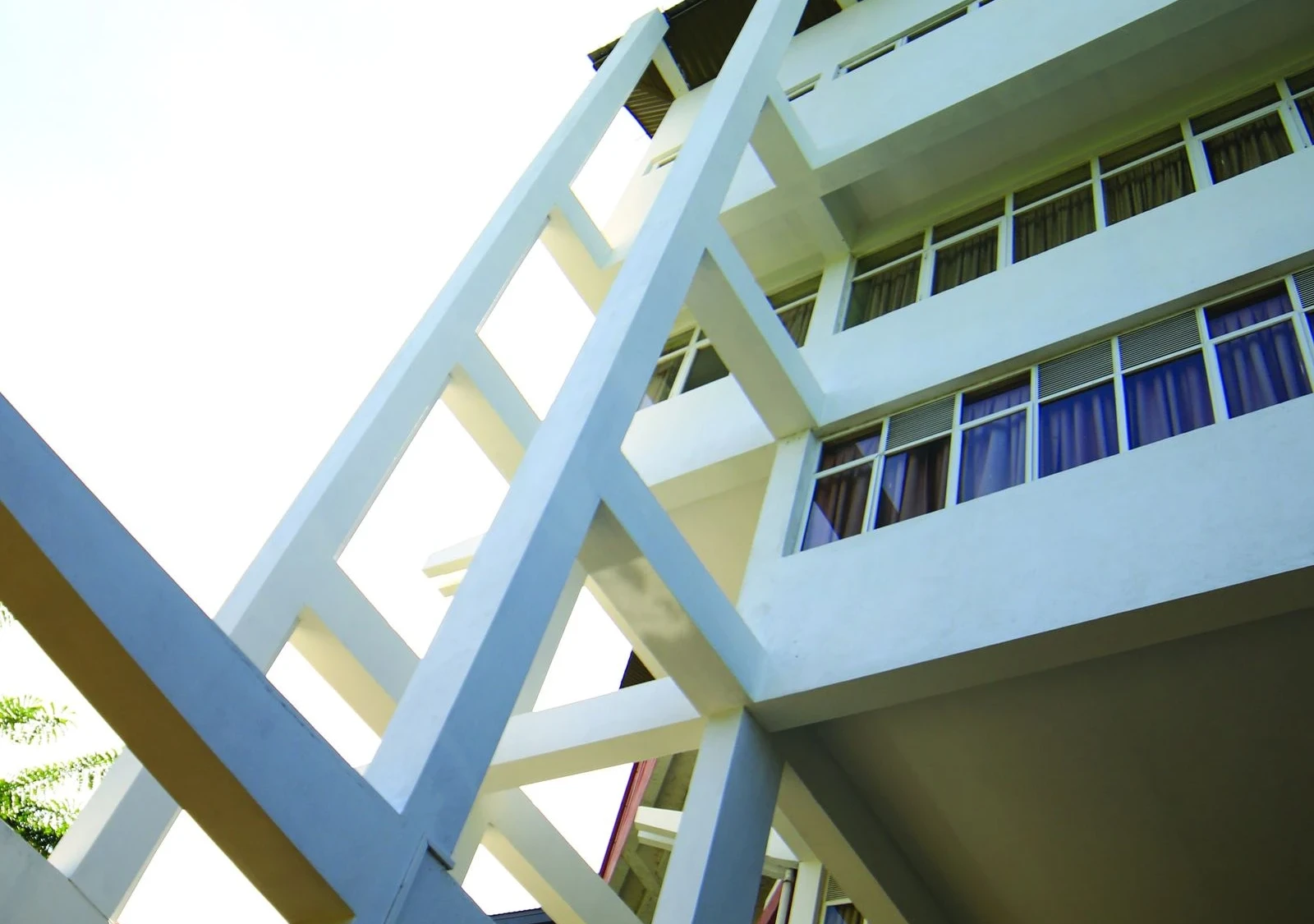
Overview
SAITM, the South Asian Institute of Technology and Medicine, is the first green campus located in the suburbs of Colombo, with a vision to make Sri Lankan and regional youth enriched with professionalism and character.
The multi-faculty campus stands on picturesque land in the midst of open greenery and integrates students of every discipline with the environment around them. Its five faculties (Medicine, Engineering, Management & Finance, ICT & Media, and Allied Health & Behavioural Sciences) are affiliated with recognised universities overseas, creating new opportunities for learners in their professional lives.
SAITM’s faculty is made up of professors and senior lecturers from Sri Lankan universities, recruited in line with University Grants Commission guidelines, together with highly qualified visiting and overseas academics. Many are former Heads of Department at state universities.
Students learn in spacious, air-conditioned classrooms and modern laboratories across a building complex of more than 96,000 square feet, with an auditorium, student lounge, cafeteria, health centre and sports facilities.
Established
2009
Campus
Malabe, Sri Lanka
Faculties
Five
Students
More than 1,500
How SAITM teaches
SAITM is a contemporary campus providing quality tertiary education for the students of today. Theory matters, but putting what you learn into practice is just as valuable. That is why SAITM courses focus on real solutions to real problems, with practical projects, industry placements and guest speakers as core features of every programme.
Vision
To produce educated men and women of character and be the leading private sector higher education institution in the South Asian region.
Mission
- To provide students the best opportunities and environment for learning, professional training and scientific research, by structuring and developing programmes and curricula.
- To enable them to acquire soft skills so they become accomplished scholars and outstanding professionals who contribute positively to the economic and social development of the region.
- To ensure the attainment of accomplished individuals who contribute towards harmonious living as disciplined and concerned members of the global society.
Values
Integrity
Openness, transparency and honesty in all activities.
Inclusiveness
High-quality programmes and services for every student, with diversity, equal opportunity and access.
Academic excellence
Acquiring, generating and sharing knowledge, with academic freedom, creativity and innovation.
Professionalism
Effective, student-focused services built on teamwork, mutual respect and ethical uprightness.
History
From its first intake in 2009 to a 1,002-bed teaching hospital and five gazetted degree orders.
| When | Milestone |
|---|---|
| 2009 | SAITM begins its programmes. The Faculty of Engineering is established on 1 July as the South Asian partner campus of the Asian Institute of Technology, and the first medical students register in September. |
| May 2011 | Internal Quality Assurance Committee appointed, supervised by the QAA Council of the University Grants Commission. |
| August 2011 | Gazette Extraordinary 1721/19 recognises SAITM as a degree-awarding institute for the MBBS. |
| July 2012 | SAITM joins the Asia Pacific Quality Network and registers with the Tertiary and Vocational Education Commission. |
| April 2013 | The 1,002-bed Dr. Neville Fernando Sri Lanka–Russia Friendship Teaching Hospital is ceremonially opened. |
| March 2014 | APQN Best/Model Internal Quality Assurance Award, Hanoi, Vietnam. |
| 2015–2017 | Gazettes 1913/14, 1960/4 and 2047/26 grant degree-awarding status for BSc Engineering (Mechatronics, Civil) and BSc Honours in Bio Systems. |
What sets SAITM apart
Recognised degrees
A degree-awarding institute approved by the Ministry of Higher Education on UGC recommendation, and a member of the Asia Pacific Quality Network.
Learning in practice
State-of-the-art facilities, apprenticeship opportunities with global experience, and research with local and international partners.
An inclusive campus
Intake without discrimination, scholarships for students in need, a growing number of overseas students, and activities that balance learning with leisure.