Award
MBBS (SAITM), Sri Lanka
Duration
Minimum five calendar years
Structure
Ten semesters of 20 weeks
Legal basis
Gazette 1721/19, amended by 1829/36
Curriculum by semester
Each discipline is taught in the semesters shown. Sub-specialities run from the sixth semester and include anaesthesiology, cardiology, dermatology, family medicine, neurology, oncology, ophthalmology, ENT, orthopaedics, radiology, rheumatology and transfusion medicine.
| Discipline | S1 | S2 | S3 | S4 | S5 | S6 | S7 | S8 | S9 | S10 |
|---|---|---|---|---|---|---|---|---|---|---|
| Year 1 | Year 2 | Year 3 | Year 4 | Year 5 | ||||||
| Premedical sciences | ||||||||||
| Biology and Ecology | Taught | |||||||||
| Medical and Biological Physics | Taught | |||||||||
| Medical Informatics | Taught | |||||||||
| Latin and Medical Terminology | Taught | |||||||||
| Preclinical sciences | ||||||||||
| Anatomy | Taught | Taught | Taught | |||||||
| Histology and Embryology | Taught | Taught | ||||||||
| Physiology | Taught | Taught | Taught | |||||||
| Biochemistry | Taught | Taught | Taught | |||||||
| Psychology | Taught | |||||||||
| Paraclinical sciences | ||||||||||
| Microbiology and Immunology | Taught | Taught | ||||||||
| Pathology | Taught | Taught | Taught | |||||||
| Pharmacology | Taught | Taught | Taught | |||||||
| Parasitology | Taught | |||||||||
| Community Medicine | Taught | Taught | Taught | Taught | ||||||
| Forensic Medicine | Taught | Taught | Taught | |||||||
| Clinical sciences | ||||||||||
| Clinical introductory programme (propaedeutics) | Taught | |||||||||
| Inter-departmental integrating programme | Taught | Taught | ||||||||
| Internal Medicine | Taught | Taught | Taught | Taught | Taught | Taught | ||||
| Surgery | Taught | Taught | Taught | Taught | Taught | Taught | ||||
| Paediatrics | Taught | Taught | Taught | Taught | Taught | Taught | ||||
| Obstetrics & Gynaecology | Taught | Taught | Taught | Taught | Taught | Taught | ||||
| Psychiatry | Taught | Taught | Taught | Taught | Taught | Taught | ||||
| Sub-specialities | Taught | Taught | Taught | Taught | Taught | |||||
Academic calendar
The academic year has two semesters of 20 weeks, each followed by six weeks for examinations and electives.
| Period | Activity |
|---|---|
| September – January | First semester (20 weeks) |
| After the first semester | Examinations and electives (6 weeks) |
| March – July | Second semester (20 weeks) |
| After the second semester | Examinations and electives (6 weeks) |
How students learn
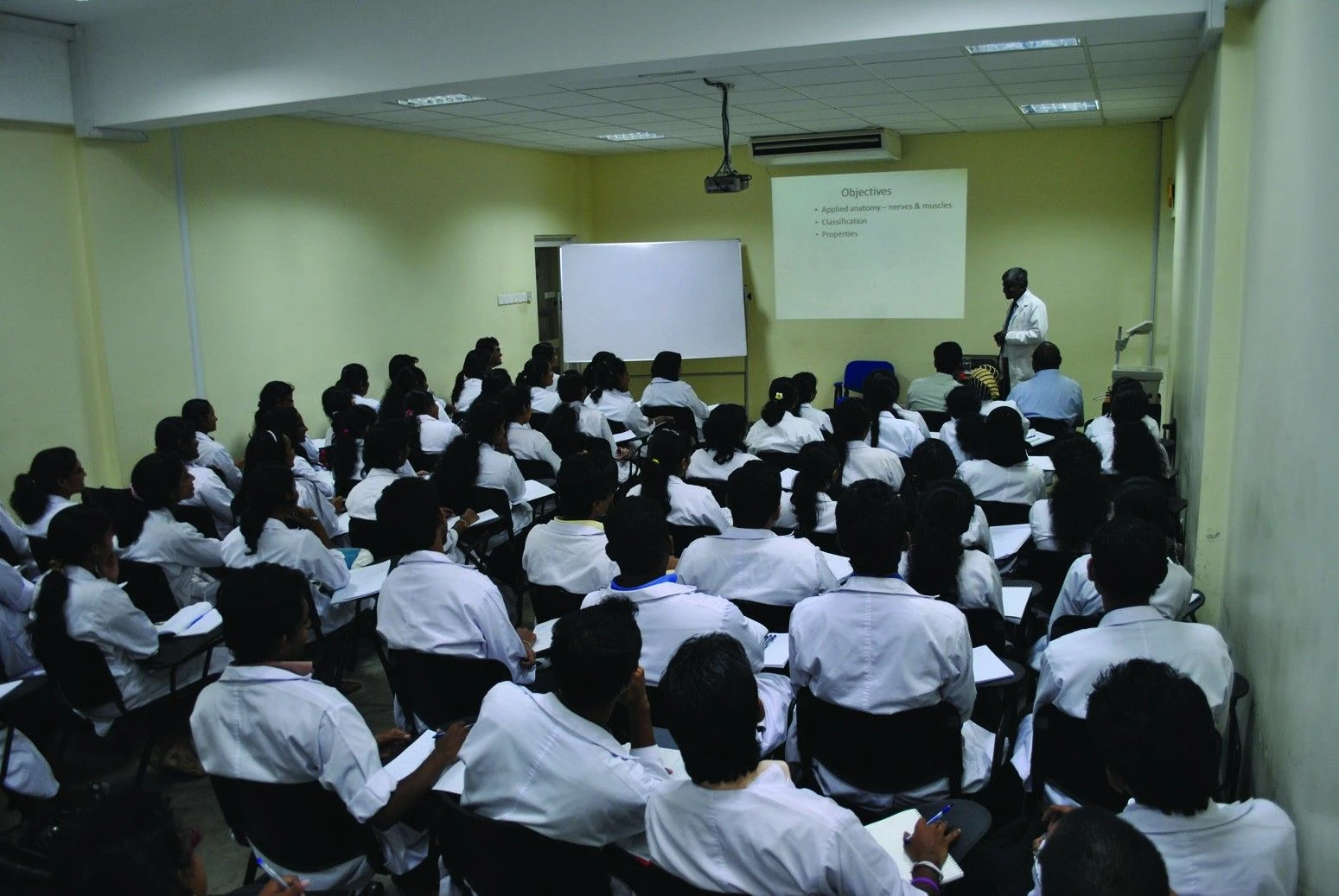
In the faculty: lectures, lecture demonstrations, problem-based learning and seminars, taught by faculty staff with visiting professors and consultants.
In the hospital: clinical rotations at the 1,002-bed teaching hospital, with bedside teaching, ward classes and seminars, followed by professorial appointments.
Professional conduct: students wear a white coat and student ID in all classes and keep a record book, certified by heads of department, documenting completed credits and examination results.
Assessment & examinations
Assessment runs throughout each semester and builds to an end-of-course final examination in each subject. The pass mark is 50%.
| Stage | Format | Purpose |
|---|---|---|
| Weekly assessments | Oral, MCQ, structured essay or practical | Checks progress in small-group classes |
| Control assessments | SEQ, MCQ, spots and oral | Must be passed to sit the credit examination |
| Credit examinations | Includes OSPE and card-based viva voce | End of semester; part of the marks carry to the final |
| Final examination | Covers all semesters of the subject | End of course; up to three attempts |
Grading at the final examination
| Marks | Grade |
|---|---|
| 80 and above | A+ |
| 70–79 | A |
| 60–69 | B |
| 50–59 | C |
| Below 50 | D (fail) |
A distinction requires at least 70% at the first attempt. Honours are awarded at the preclinical, paraclinical and clinical levels.
Progression rules
- At least 80% attendance at lectures, small-group classes and practicals to sit a final examination.
- All preclinical examinations must be passed before paraclinical examinations, and all paraclinical before clinical.
- Clinical appointments begin after passing the finals in Anatomy, Histology and Physiology.
- The maximum period of studentship is ten years from first registration.
Entry requirements
Admission follows University Grants Commission criteria for the Biology stream: a minimum of two credit passes and one simple pass at GCE A/L.